


• Canned Alcoholic Beverages Market: Trends, Challenges, and Forecasts


    United States of America – [21-07-2025] – The Insight Partners is proud to announce its newest market report, "Canned Alcoholic Beverages Market: Trends, Challenges, and Forecasts: An In-depth Analysis of the market." The report offers a holistic view of the market, highlighting the current market scenario and growth estimates for the forecast period.


    Overview of the Canned Alcoholic Beverages Market
    The Canned Alcoholic Beverages Market has seen significant development in recent years, with shifting consumer preferences, product innovations, and evolving regulatory frameworks driving its growth trajectory. Factors such as convenience packaging, the rising popularity of ready-to-drink (RTD) cocktails, and premiumization trends are reshaping the industry.


    Market Segmentation:
    By Product

    Wine
    RTD Cocktails
    Hard Seltzers
    By Distribution Channel

    SuperMarkets and HyperMarkets
    Specialty Stores
    Online Retail


    Get the Sample of The Report: - https://www.theinsightpartners.com/sample/TIPRE00022867


    Key Findings and Insights

    Market Size and Growth

    Historical Data: The Canned Alcoholic Beverages Market is expected to register a CAGR of 19.2% from 2025 to 2031, with a market size expanding from US$ XX million in 2024 to US$ XX Million by 2031.
    This growth is supported by shifting lifestyles, rising consumer demand for convenience, and innovative product offerings by key players.
    Key Factors Driving Market Dynamics

    Technological Advancements: Improved canning technology, sustainable packaging solutions, and flavor innovation.
    Changing Consumer Preferences: Rising demand for low-calorie, low-alcohol, and premium beverages; popularity of RTD cocktails and seltzers.
    Regulatory Changes: Alcohol labeling standards and sustainability-driven packaging regulations shaping product development.


    Read More: -https://www.theinsightpartners.com/reports/canned-alcoholic-beverages-market


    Growth Opportunities

    The Canned Alcoholic Beverages Market is poised for strong growth, driven by lifestyle changes and evolving consumer preferences for convenience, portability, and innovation. The rising popularity of ready-to-drink cocktails, hard seltzers, and flavored alcoholic beverages is expected to propel market expansion globally, particularly among younger demographics seeking low-ABV (alcohol by volume) and health-conscious options.

    Emerging markets, including Asia-Pacific and Latin America, present significant growth avenues due to rising disposable incomes, urbanization, and a growing appetite for Western drinking trends. Local breweries and global beverage giants are increasingly investing in these regions, creating opportunities for expanded distribution and localized product innovations.

    Technological advancements in sustainable canning and packaging are also creating new opportunities. The demand for eco-friendly, recyclable, and lightweight packaging aligns with consumer and regulatory expectations, offering a competitive advantage for brands adopting green initiatives.


    Conclusion

    The Canned Alcoholic Beverages Market: Global Industry Trends, Share, Size, Growth, Opportunity, and Forecast 2025-2031 report provides much-needed insight for a company willing to set up its operations in the Canned Alcoholic Beverages Market. Since an in-depth analysis of competitive dynamics, the environment, and probable growth path are given in the report, a stakeholder can move ahead with fact-based decision-making in favor of market achievements and enhancement of business opportunities.


    Frequently Asked Questions (FAQ): -

    What are canned alcoholic beverages?
    Answer: - Canned alcoholic beverages include beer, wine, spirits, and ready-to-drink (RTD) cocktails packaged in cans for convenient, portable consumption. They cater to the growing demand for single-serve and on-the-go alcohol options.
    What is driving the growth of the canned alcoholic beverages market?
    Answer: - Growth is driven by rising consumer demand for convenience, the popularity of RTD cocktails and hard seltzers, premiumization trends, and the shift toward low-calorie and low-alcohol options. Technological advancements in canning and sustainable packaging also contribute to market expansion.
    Canned Alcoholic Beverages Market: Trends, Challenges, and Forecasts United States of America – [21-07-2025] – The Insight Partners is proud to announce its newest market report, "Canned Alcoholic Beverages Market: Trends, Challenges, and Forecasts: An In-depth Analysis of the market." The report offers a holistic view of the market, highlighting the current market scenario and growth estimates for the forecast period. Overview of the Canned Alcoholic Beverages Market The Canned Alcoholic Beverages Market has seen significant development in recent years, with shifting consumer preferences, product innovations, and evolving regulatory frameworks driving its growth trajectory. Factors such as convenience packaging, the rising popularity of ready-to-drink (RTD) cocktails, and premiumization trends are reshaping the industry. Market Segmentation: By Product Wine RTD Cocktails Hard Seltzers By Distribution Channel SuperMarkets and HyperMarkets Specialty Stores Online Retail Get the Sample of The Report: - https://www.theinsightpartners.com/sample/TIPRE00022867 Key Findings and Insights Market Size and Growth Historical Data: The Canned Alcoholic Beverages Market is expected to register a CAGR of 19.2% from 2025 to 2031, with a market size expanding from US$ XX million in 2024 to US$ XX Million by 2031. This growth is supported by shifting lifestyles, rising consumer demand for convenience, and innovative product offerings by key players. Key Factors Driving Market Dynamics Technological Advancements: Improved canning technology, sustainable packaging solutions, and flavor innovation. Changing Consumer Preferences: Rising demand for low-calorie, low-alcohol, and premium beverages; popularity of RTD cocktails and seltzers. Regulatory Changes: Alcohol labeling standards and sustainability-driven packaging regulations shaping product development. Read More: -https://www.theinsightpartners.com/reports/canned-alcoholic-beverages-market Growth Opportunities The Canned Alcoholic Beverages Market is poised for strong growth, driven by lifestyle changes and evolving consumer preferences for convenience, portability, and innovation. The rising popularity of ready-to-drink cocktails, hard seltzers, and flavored alcoholic beverages is expected to propel market expansion globally, particularly among younger demographics seeking low-ABV (alcohol by volume) and health-conscious options. Emerging markets, including Asia-Pacific and Latin America, present significant growth avenues due to rising disposable incomes, urbanization, and a growing appetite for Western drinking trends. Local breweries and global beverage giants are increasingly investing in these regions, creating opportunities for expanded distribution and localized product innovations. Technological advancements in sustainable canning and packaging are also creating new opportunities. The demand for eco-friendly, recyclable, and lightweight packaging aligns with consumer and regulatory expectations, offering a competitive advantage for brands adopting green initiatives. Conclusion The Canned Alcoholic Beverages Market: Global Industry Trends, Share, Size, Growth, Opportunity, and Forecast 2025-2031 report provides much-needed insight for a company willing to set up its operations in the Canned Alcoholic Beverages Market. Since an in-depth analysis of competitive dynamics, the environment, and probable growth path are given in the report, a stakeholder can move ahead with fact-based decision-making in favor of market achievements and enhancement of business opportunities. Frequently Asked Questions (FAQ): - What are canned alcoholic beverages? Answer: - Canned alcoholic beverages include beer, wine, spirits, and ready-to-drink (RTD) cocktails packaged in cans for convenient, portable consumption. They cater to the growing demand for single-serve and on-the-go alcohol options. What is driving the growth of the canned alcoholic beverages market? Answer: - Growth is driven by rising consumer demand for convenience, the popularity of RTD cocktails and hard seltzers, premiumization trends, and the shift toward low-calorie and low-alcohol options. Technological advancements in canning and sustainable packaging also contribute to market expansion.
    Canned Alcoholic Beverages Market - Size and Share by 2031 : The Insight Partners
    Canned Alcoholic Beverages Market is estimated to grow at a CAGR of 19.2% by 2031. Discover in-depth insights into the market's size, growth, trends.
    0 Comments 0 Shares 2K Views 0 Reviews
  • https://ulystar.in/pages/haktuts
    https://ulystar.in/pages/haktuts
    ULYSTAR.IN
    Haktuts
    Haktuts is a website that provides daily links for free spins and coins for the popular mobile game Coin Master. Players can use these links to collect rewards without having to spend real money.
    0 Comments 0 Shares 86 Views 0 Reviews
  • Transforming Transportation: The Connected Truck Market Overview


    United States of America – [21-07-2025] – The Insight Partners is proud to announce its newest market report, "Transforming Transportation: The Connected Truck Market Overview: An In-depth Analysis of the market." The report provides a comprehensive view of the market, detailing the current landscape, key dynamics, and projected growth trends during the forecast period.


    Overview of the Connected Truck Market
    The Connected Truck Market has experienced significant transformation, with rapid adoption of telematics, smart fleet solutions, and AI-powered analytics redefining the way commercial vehicles operate. Shifting industry dynamics, including increased regulatory mandates for fleet safety, evolving customer expectations, and advancements in connectivity solutions, are driving market growth.


    Market Segmentation:
    By Component

    Hardware
    Software
    Services
    By Range

    Dedicated Short Range Communication
    Long Range Communication
    By Communication Type

    Vehicle to Vehicle
    Vehicle to Infrastructure
    Vehicle to Cloud


    Get the Sample of The Report: - https://www.theinsightpartners.com/sample/TIPAT00002202


    Key Findings and Insights

    Market Size and Growth

    Historical Data: The connected truck market is expected to register a CAGR of 15.6% during 2023–2031. The evolution of advanced technologies, like the integration of the Internet of Things (IoT) in trucks, is likely to remain a key trend in the market.
    Growth is supported by government initiatives for intelligent transport systems, demand for fleet optimization, and technological innovations.
    Key Factors Driving Market Dynamics

    Technological Advancements: Adoption of IoT, AI, 5G connectivity, and cloud-based fleet management.
    Changing Consumer Preferences: Rising demand for safer, more efficient, and digitally managed transportation solutions.
    Regulatory Changes: Mandates for electronic logging devices (ELDs), emissions monitoring, and vehicle-to-infrastructure integration.


    Read More: - https://www.theinsightpartners.com/reports/connected-truck-market


    Growth Opportunities

    The Connected Truck Market is expected to grow significantly as logistics, transportation, and fleet operators adopt digital solutions to enhance efficiency, safety, and profitability. Growing demand for real-time vehicle tracking, predictive maintenance, and route optimization is fueling investments in telematics and connectivity platforms.

    One of the strongest growth opportunities lies in 5G and IoT integration, enabling faster, more reliable data transfer and advanced applications like autonomous fleet management and real-time diagnostics. Companies developing connected solutions with AI-based analytics and cloud platforms will gain a competitive advantage by offering predictive insights and reducing operational downtime.


    Get The Infographics of Report: -

    https://www.flickr.com/photos/203116520@N04/54668513976/in/dateposted-public/


    Conclusion

    The Connected Truck Market: Global Industry Trends, Share, Size, Growth, Opportunity, and Forecast 2025-2031 report provides much-needed insight for a company willing to set up its operations in the market. Since an in-depth analysis of competitive dynamics, the environment, and probable growth path are given in the report, a stakeholder can move ahead with fact-based decision-making in favor of market achievements and enhancement of business opportunities.


    Frequently Asked Questions (FAQ): -

    What is a connected truck?
    Answer: - A connected truck is a commercial vehicle equipped with internet-enabled technologies such as GPS, telematics, sensors, and vehicle-to-everything (V2X) communication systems that enable real-time data exchange, monitoring, and remote diagnostics for improved efficiency, safety, and performance.

    What are the main factors driving the growth of the market?
    Answer: - Key growth drivers include increasing demand for fleet management solutions, advancements in 5G and IoT, government regulations for vehicle safety and emissions, and rising adoption of electric and autonomous commercial vehicles.
    Transforming Transportation: The Connected Truck Market Overview United States of America – [21-07-2025] – The Insight Partners is proud to announce its newest market report, "Transforming Transportation: The Connected Truck Market Overview: An In-depth Analysis of the market." The report provides a comprehensive view of the market, detailing the current landscape, key dynamics, and projected growth trends during the forecast period. Overview of the Connected Truck Market The Connected Truck Market has experienced significant transformation, with rapid adoption of telematics, smart fleet solutions, and AI-powered analytics redefining the way commercial vehicles operate. Shifting industry dynamics, including increased regulatory mandates for fleet safety, evolving customer expectations, and advancements in connectivity solutions, are driving market growth. Market Segmentation: By Component Hardware Software Services By Range Dedicated Short Range Communication Long Range Communication By Communication Type Vehicle to Vehicle Vehicle to Infrastructure Vehicle to Cloud Get the Sample of The Report: - https://www.theinsightpartners.com/sample/TIPAT00002202 Key Findings and Insights Market Size and Growth Historical Data: The connected truck market is expected to register a CAGR of 15.6% during 2023–2031. The evolution of advanced technologies, like the integration of the Internet of Things (IoT) in trucks, is likely to remain a key trend in the market. Growth is supported by government initiatives for intelligent transport systems, demand for fleet optimization, and technological innovations. Key Factors Driving Market Dynamics Technological Advancements: Adoption of IoT, AI, 5G connectivity, and cloud-based fleet management. Changing Consumer Preferences: Rising demand for safer, more efficient, and digitally managed transportation solutions. Regulatory Changes: Mandates for electronic logging devices (ELDs), emissions monitoring, and vehicle-to-infrastructure integration. Read More: - https://www.theinsightpartners.com/reports/connected-truck-market Growth Opportunities The Connected Truck Market is expected to grow significantly as logistics, transportation, and fleet operators adopt digital solutions to enhance efficiency, safety, and profitability. Growing demand for real-time vehicle tracking, predictive maintenance, and route optimization is fueling investments in telematics and connectivity platforms. One of the strongest growth opportunities lies in 5G and IoT integration, enabling faster, more reliable data transfer and advanced applications like autonomous fleet management and real-time diagnostics. Companies developing connected solutions with AI-based analytics and cloud platforms will gain a competitive advantage by offering predictive insights and reducing operational downtime. Get The Infographics of Report: - https://www.flickr.com/photos/203116520@N04/54668513976/in/dateposted-public/ Conclusion The Connected Truck Market: Global Industry Trends, Share, Size, Growth, Opportunity, and Forecast 2025-2031 report provides much-needed insight for a company willing to set up its operations in the market. Since an in-depth analysis of competitive dynamics, the environment, and probable growth path are given in the report, a stakeholder can move ahead with fact-based decision-making in favor of market achievements and enhancement of business opportunities. Frequently Asked Questions (FAQ): - What is a connected truck? Answer: - A connected truck is a commercial vehicle equipped with internet-enabled technologies such as GPS, telematics, sensors, and vehicle-to-everything (V2X) communication systems that enable real-time data exchange, monitoring, and remote diagnostics for improved efficiency, safety, and performance. What are the main factors driving the growth of the market? Answer: - Key growth drivers include increasing demand for fleet management solutions, advancements in 5G and IoT, government regulations for vehicle safety and emissions, and rising adoption of electric and autonomous commercial vehicles.
    Connected Truck Market Analysis 2021-2031 | Trends : The Insight Partners
    Connected Truck Market represents a CAGR of 15.6% from 2025-2031 | Delve into the segmented landscape to identify high-growth segments
    0 Comments 0 Shares 1K Views 0 Reviews
  • Exploring Design Trends in the Decorative Laminates Market


    United States of America – [21-07-2025] – The Insight Partners is proud to announce its newest market report, "Exploring Design Trends in the Decorative Laminates Market: An In-depth Analysis of the market." The report offers a detailed overview of the market, highlighting the current market landscape, trends, and growth estimates for the forecast period.


    Overview of the Decorative Laminates Market
    The Decorative Laminates Market has experienced notable shifts in recent years due to changing interior design trends, rising urbanization, and technological innovations in surface finishing. Increasing consumer demand for affordable, durable, and aesthetically pleasing materials for residential, commercial, and industrial spaces is driving market expansion. Environmental regulations and a growing focus on sustainable materials are also influencing product development and market strategies.


    Market Segmentation:
    By Product Type

    High Pressure Laminates and Low Pressure Laminates
    By Application

    Furniture
    Flooring
    Wall Panels
    Cabinets
    Counters
    Doors
    Others
    By End Use

    Residential
    Commercial
    Institutional
    Industrial


    Get the Sample of The Report: - https://www.theinsightpartners.com/sample/TIPRE00004667


    Key Findings and Insights

    Market Size and Growth

    Historical Data: The Decorative Laminates Market is expected to register a CAGR of 4.0% from 2025 to 2031, with a market size expanding from US$ XX million in 2024 to US$ XX Million by 2031.
    Growth is supported by rising home renovation projects, demand for modular furniture, and cost-effective alternatives to natural wood and stone.
    Key Factors Driving Market Dynamics

    Technological Advancements: Enhanced surface textures, digital printing, anti-fingerprint and antimicrobial coatings.
    Changing Consumer Preferences: Growing popularity of affordable yet stylish furniture and eco-friendly laminates.
    Regulatory Changes: Increasing adoption of sustainable and low-VOC (volatile organic compound) products to meet environmental standards.


    Read More:- https://www.theinsightpartners.com/reports/decorative-laminates-market


    Growth Opportunities

    The Decorative Laminates Market presents significant growth opportunities fueled by increasing urbanization, a surge in home renovation activities, and rising demand for cost-effective decorative materials. With real estate development accelerating, particularly in emerging economies, the demand for laminates for flooring, furniture, and wall applications is poised to grow substantially.

    Sustainability-driven innovations are creating new avenues for manufacturers. The rising preference for eco-friendly, recyclable, and low-emission laminates is prompting companies to invest in green technologies and bio-based raw materials. Brands offering sustainable yet visually appealing products are likely to gain a competitive edge, especially in markets where environmental regulations are becoming more stringent.

    Digital printing and customization trends are also reshaping the market. Consumers increasingly seek personalized patterns, textures, and colors, which is encouraging manufacturers to adopt advanced printing and finishing techniques to deliver bespoke solutions for residential and commercial interiors.


    Get The Infographics of Report: -https://imagizer.imageshack.com/img922/995/R3bCz4.jpg


    Conclusion

    The Decorative Laminates Market: Global Industry Trends, Share, Size, Growth, Opportunity, and Forecast 2025-2031 report provides much-needed insight for a company willing to set up its operations in the Decorative Laminates Market. Since an in-depth analysis of competitive dynamics, the environment, and probable growth path are given in the report, a stakeholder can move ahead with fact-based decision-making in favor of market achievements and enhancement of business opportunities.


    Frequently Asked Questions (FAQ): -

    What are decorative laminates?
    Answer: - Decorative laminates are surface finishing materials used for furniture, flooring, wall panels, and other interior applications. They offer aesthetic appeal, durability, and affordability compared to natural materials like wood, stone, or metal.

    What factors are driving the growth of the Decorative Laminates Market?
    Answer: - Key growth drivers include rising urbanization, increased home renovation projects, the growing demand for affordable and stylish interior solutions, advancements in laminate printing and finishing, and the rising adoption of eco-friendly and low-emission products.
    Exploring Design Trends in the Decorative Laminates Market United States of America – [21-07-2025] – The Insight Partners is proud to announce its newest market report, "Exploring Design Trends in the Decorative Laminates Market: An In-depth Analysis of the market." The report offers a detailed overview of the market, highlighting the current market landscape, trends, and growth estimates for the forecast period. Overview of the Decorative Laminates Market The Decorative Laminates Market has experienced notable shifts in recent years due to changing interior design trends, rising urbanization, and technological innovations in surface finishing. Increasing consumer demand for affordable, durable, and aesthetically pleasing materials for residential, commercial, and industrial spaces is driving market expansion. Environmental regulations and a growing focus on sustainable materials are also influencing product development and market strategies. Market Segmentation: By Product Type High Pressure Laminates and Low Pressure Laminates By Application Furniture Flooring Wall Panels Cabinets Counters Doors Others By End Use Residential Commercial Institutional Industrial Get the Sample of The Report: - https://www.theinsightpartners.com/sample/TIPRE00004667 Key Findings and Insights Market Size and Growth Historical Data: The Decorative Laminates Market is expected to register a CAGR of 4.0% from 2025 to 2031, with a market size expanding from US$ XX million in 2024 to US$ XX Million by 2031. Growth is supported by rising home renovation projects, demand for modular furniture, and cost-effective alternatives to natural wood and stone. Key Factors Driving Market Dynamics Technological Advancements: Enhanced surface textures, digital printing, anti-fingerprint and antimicrobial coatings. Changing Consumer Preferences: Growing popularity of affordable yet stylish furniture and eco-friendly laminates. Regulatory Changes: Increasing adoption of sustainable and low-VOC (volatile organic compound) products to meet environmental standards. Read More:- https://www.theinsightpartners.com/reports/decorative-laminates-market Growth Opportunities The Decorative Laminates Market presents significant growth opportunities fueled by increasing urbanization, a surge in home renovation activities, and rising demand for cost-effective decorative materials. With real estate development accelerating, particularly in emerging economies, the demand for laminates for flooring, furniture, and wall applications is poised to grow substantially. Sustainability-driven innovations are creating new avenues for manufacturers. The rising preference for eco-friendly, recyclable, and low-emission laminates is prompting companies to invest in green technologies and bio-based raw materials. Brands offering sustainable yet visually appealing products are likely to gain a competitive edge, especially in markets where environmental regulations are becoming more stringent. Digital printing and customization trends are also reshaping the market. Consumers increasingly seek personalized patterns, textures, and colors, which is encouraging manufacturers to adopt advanced printing and finishing techniques to deliver bespoke solutions for residential and commercial interiors. Get The Infographics of Report: -https://imagizer.imageshack.com/img922/995/R3bCz4.jpg Conclusion The Decorative Laminates Market: Global Industry Trends, Share, Size, Growth, Opportunity, and Forecast 2025-2031 report provides much-needed insight for a company willing to set up its operations in the Decorative Laminates Market. Since an in-depth analysis of competitive dynamics, the environment, and probable growth path are given in the report, a stakeholder can move ahead with fact-based decision-making in favor of market achievements and enhancement of business opportunities. Frequently Asked Questions (FAQ): - What are decorative laminates? Answer: - Decorative laminates are surface finishing materials used for furniture, flooring, wall panels, and other interior applications. They offer aesthetic appeal, durability, and affordability compared to natural materials like wood, stone, or metal. What factors are driving the growth of the Decorative Laminates Market? Answer: - Key growth drivers include rising urbanization, increased home renovation projects, the growing demand for affordable and stylish interior solutions, advancements in laminate printing and finishing, and the rising adoption of eco-friendly and low-emission products.
    Decorative Laminates Market Dynamics - 2021 to 2031 : The Insight Partners
    Decorative Laminates Market is anticipated to grow at a CAGR of 4.0% from 2025-2031. The report covers global, regional, and country levels analysis.
    0 Comments 0 Shares 2K Views 0 Reviews
  • Transforming Quality Control: Insights into the Digital Inspection Market


    United States of America – [21-07-2025] – The Insight Partners is proud to announce its newest market report, "Transforming Quality Control: Insights into the Digital Inspection Market: An In-depth Analysis of the market." The report provides a holistic view of the market and describes the current scenario as well as growth estimates during the forecast period.

    Overview of Digital Inspection Market

    There has been notable development in the Digital Inspection Market, including phases of growth and decline, shifting dynamics, and evolving end-user needs. This report provides valuable insight into the driving forces behind these changes, such as technological advancements, stricter regulatory frameworks, and the transformation of consumer preferences.


    Market Segmentation:

    By Component

    Hardware
    Software
    Services
    By Technology

    Machine Vision
    Metrology
    NDT
    By Dimension

    2D
    3D
    By Industrial Vertical

    Manufacturing
    Electronics
    Oil and Gas
    Aerospace and Defense
    Automotive
    Power
    Food and Pharmaceuticals


    Get the Sample of The Report: - https://www.theinsightpartners.com/sample/TIPRE00011484


    Key Findings and Insights

    Market Size and Growth

    Historical Data: The Digital Inspection Market is expected to register a CAGR of 7.5% from 2025 to 2031, with a market size expanding from US$ XX million in 2024 to US$ XX Million by 2031.
    Key Factors and Emerging Trends:
    Spotting Emerging Trends:
    The market is witnessing an emergence of new trends that are reshaping the competitive landscape. Identifying these trends is crucial for stakeholders looking to capitalize on growth opportunities.
    Technological Advancements:
    Innovations in digital inspection technologies, such as AI and machine learning, are enhancing the accuracy and efficiency of inspections. These advancements are not only improving operational processes but also reducing costs for businesses.
    Changing Consumer Preferences:
    There is a noticeable shift in consumer preferences towards more automated and efficient inspection solutions. Customers are increasingly seeking services that offer real-time data analysis and reporting capabilities.
    Regulatory Changes:
    The regulatory environment is continuously evolving, impacting how inspections are conducted across various industries. Compliance with new regulations is driving companies to adopt digital inspection solutions that ensure adherence to standards.


    Read More: - https://www.theinsightpartners.com/reports/digital-inspection-market


    Growth Opportunities

    The Digital Inspection Market is set to expand significantly during the forecast period, offering multiple avenues for growth:

    AI and Automation Integration: AI-powered systems are transforming defect detection and predictive maintenance, particularly benefiting industries like automotive, aerospace, and electronics.
    Industry 4.0 and IoT Adoption: Connected inspection systems are enhancing operational efficiency and reducing costs, fueling adoption across smart manufacturing facilities.
    Demand in Regulated Sectors: Rising compliance requirements in healthcare, pharmaceuticals, and food & beverage are driving the deployment of digital inspection for traceability and quality control.
    Advancements in Imaging and NDT: Cutting-edge 3D imaging, high-resolution cameras, and non-destructive testing tools are enabling precision inspections in critical sectors such as energy and semiconductors.
    Emerging Market Expansion: Industrialization in Asia-Pacific, Latin America, and the Middle East is creating strong opportunities for global providers to expand their footprint.


    Get The Infographics of Report: - https://pin.it/4MPjPsJj0


    Conclusion

    The Digital Inspection Market: Global Industry Trends, Share, Size, Growth, Opportunity, and Forecast 2025-2031 report provides much-needed insight for a company willing to set up its operations in the Digital Inspection Market. Since an in-depth analysis of competitive dynamics, the environment, and probable growth path are given in the report, a stakeholder can move ahead with fact-based decision-making in favor of market achievements and enhancement of business opportunities.


    Frequently Asked Questions (FAQ): -

    What drives digital inspection market growth?
    Answer: - The market is driven by increasing demand for quality assurance, adoption of advanced technologies like AI and IoT, and stringent regulatory compliance across industries such as automotive, aerospace, and healthcare.

    How is AI transforming digital inspections?
    Answer: - AI enables automated defect detection, predictive maintenance, and data analytics, reducing inspection times while improving accuracy and efficiency for manufacturers and service providers.
    Transforming Quality Control: Insights into the Digital Inspection Market United States of America – [21-07-2025] – The Insight Partners is proud to announce its newest market report, "Transforming Quality Control: Insights into the Digital Inspection Market: An In-depth Analysis of the market." The report provides a holistic view of the market and describes the current scenario as well as growth estimates during the forecast period. Overview of Digital Inspection Market There has been notable development in the Digital Inspection Market, including phases of growth and decline, shifting dynamics, and evolving end-user needs. This report provides valuable insight into the driving forces behind these changes, such as technological advancements, stricter regulatory frameworks, and the transformation of consumer preferences. Market Segmentation: By Component Hardware Software Services By Technology Machine Vision Metrology NDT By Dimension 2D 3D By Industrial Vertical Manufacturing Electronics Oil and Gas Aerospace and Defense Automotive Power Food and Pharmaceuticals Get the Sample of The Report: - https://www.theinsightpartners.com/sample/TIPRE00011484 Key Findings and Insights Market Size and Growth Historical Data: The Digital Inspection Market is expected to register a CAGR of 7.5% from 2025 to 2031, with a market size expanding from US$ XX million in 2024 to US$ XX Million by 2031. Key Factors and Emerging Trends: Spotting Emerging Trends: The market is witnessing an emergence of new trends that are reshaping the competitive landscape. Identifying these trends is crucial for stakeholders looking to capitalize on growth opportunities. Technological Advancements: Innovations in digital inspection technologies, such as AI and machine learning, are enhancing the accuracy and efficiency of inspections. These advancements are not only improving operational processes but also reducing costs for businesses. Changing Consumer Preferences: There is a noticeable shift in consumer preferences towards more automated and efficient inspection solutions. Customers are increasingly seeking services that offer real-time data analysis and reporting capabilities. Regulatory Changes: The regulatory environment is continuously evolving, impacting how inspections are conducted across various industries. Compliance with new regulations is driving companies to adopt digital inspection solutions that ensure adherence to standards. Read More: - https://www.theinsightpartners.com/reports/digital-inspection-market Growth Opportunities The Digital Inspection Market is set to expand significantly during the forecast period, offering multiple avenues for growth: AI and Automation Integration: AI-powered systems are transforming defect detection and predictive maintenance, particularly benefiting industries like automotive, aerospace, and electronics. Industry 4.0 and IoT Adoption: Connected inspection systems are enhancing operational efficiency and reducing costs, fueling adoption across smart manufacturing facilities. Demand in Regulated Sectors: Rising compliance requirements in healthcare, pharmaceuticals, and food & beverage are driving the deployment of digital inspection for traceability and quality control. Advancements in Imaging and NDT: Cutting-edge 3D imaging, high-resolution cameras, and non-destructive testing tools are enabling precision inspections in critical sectors such as energy and semiconductors. Emerging Market Expansion: Industrialization in Asia-Pacific, Latin America, and the Middle East is creating strong opportunities for global providers to expand their footprint. Get The Infographics of Report: - https://pin.it/4MPjPsJj0 Conclusion The Digital Inspection Market: Global Industry Trends, Share, Size, Growth, Opportunity, and Forecast 2025-2031 report provides much-needed insight for a company willing to set up its operations in the Digital Inspection Market. Since an in-depth analysis of competitive dynamics, the environment, and probable growth path are given in the report, a stakeholder can move ahead with fact-based decision-making in favor of market achievements and enhancement of business opportunities. Frequently Asked Questions (FAQ): - What drives digital inspection market growth? Answer: - The market is driven by increasing demand for quality assurance, adoption of advanced technologies like AI and IoT, and stringent regulatory compliance across industries such as automotive, aerospace, and healthcare. How is AI transforming digital inspections? Answer: - AI enables automated defect detection, predictive maintenance, and data analytics, reducing inspection times while improving accuracy and efficiency for manufacturers and service providers.
    Digital Inspection Market Growth Report | 2021 to 2031 : The Insight Partners
    Digital Inspection Market expected to cross CAGR 7.5% by 2031. Unveiling market opportunities and key drivers.
    0 Comments 0 Shares 2K Views 0 Reviews
  • The Growing for Distributed Antenna System (DAS) Market


    In recent years, the demand for robust and reliable wireless communication has surged, driven by the exponential growth of mobile devices and data consumption. One of the key technologies addressing this demand is the Distributed Antenna System (DAS). This innovative solution enhances cellular coverage and capacity, making it essential for various sectors, including telecommunications, healthcare, education, and transportation.

    What is a Distributed Antenna System?

    A DAS is a network of spatially separated antenna nodes connected to a common source. It improves wireless service by distributing the signal throughout a building or area, effectively overcoming the limitations of traditional antennas. DAS can be categorized into two types: active and passive systems. Active DAS uses amplifiers to boost signals, while passive DAS relies on coaxial cables to distribute signals from a central antenna.


    Read More: - https://www.theinsightpartners.com/reports/distributed-antenna-system-das-market

    Market Drivers

    The Distributed Antenna System (DAS) Market is driven by several factors:

    Increased Mobile Data Traffic: As more users connect to mobile networks, the need for improved coverage and capacity becomes critical. DAS can support high-density environments, such as stadiums, airports, and urban centers, where traditional systems struggle.
    5G Rollout: The global rollout of 5G networks is a significant catalyst for DAS adoption. 5G technology requires more antennas to provide the necessary coverage and capacity, making DAS an ideal solution for urban areas and large venues.
    Smart Building Initiatives: The trend towards smart buildings is also boosting the DAS market. These buildings require seamless connectivity for IoT devices, security systems, and communication networks, all of which can benefit from a robust DAS.
    Public Safety Regulations: Governments are increasingly mandating enhanced communication systems in public spaces for emergency response. DAS can help ensure reliable communication for first responders, making it a critical investment for infrastructure projects.


    Get the Sample of The Report: - https://www.theinsightpartners.com/sample/TIPEL00002685


    Challenges and Opportunities

    Despite its advantages, the Distributed Antenna System (DAS) Market faces challenges such as high installation costs and the complexity of integration with existing systems. However, these challenges also present opportunities for innovation. Companies are investing in advanced technologies like cloud-based DAS and artificial intelligence to optimize performance and reduce costs.


    Get The Infographics of Report: - https://diigo.com/0109zqm


    Frequently Asked Questions (FAQ): -

    What is driving growth in the Distributed Antenna System (DAS) market?
    Answer: - The DAS market is growing due to increasing mobile data traffic, rising demand for improved network coverage, and the rapid deployment of 5G infrastructure across urban and enterprise environments.

    What industries are adopting DAS solutions?
    Answer: - Key adopters include telecommunications, commercial real estate, transportation (airports, railways), healthcare, and public safety sectors seeking reliable indoor and outdoor connectivity.
    The Growing for Distributed Antenna System (DAS) Market In recent years, the demand for robust and reliable wireless communication has surged, driven by the exponential growth of mobile devices and data consumption. One of the key technologies addressing this demand is the Distributed Antenna System (DAS). This innovative solution enhances cellular coverage and capacity, making it essential for various sectors, including telecommunications, healthcare, education, and transportation. What is a Distributed Antenna System? A DAS is a network of spatially separated antenna nodes connected to a common source. It improves wireless service by distributing the signal throughout a building or area, effectively overcoming the limitations of traditional antennas. DAS can be categorized into two types: active and passive systems. Active DAS uses amplifiers to boost signals, while passive DAS relies on coaxial cables to distribute signals from a central antenna. Read More: - https://www.theinsightpartners.com/reports/distributed-antenna-system-das-market Market Drivers The Distributed Antenna System (DAS) Market is driven by several factors: Increased Mobile Data Traffic: As more users connect to mobile networks, the need for improved coverage and capacity becomes critical. DAS can support high-density environments, such as stadiums, airports, and urban centers, where traditional systems struggle. 5G Rollout: The global rollout of 5G networks is a significant catalyst for DAS adoption. 5G technology requires more antennas to provide the necessary coverage and capacity, making DAS an ideal solution for urban areas and large venues. Smart Building Initiatives: The trend towards smart buildings is also boosting the DAS market. These buildings require seamless connectivity for IoT devices, security systems, and communication networks, all of which can benefit from a robust DAS. Public Safety Regulations: Governments are increasingly mandating enhanced communication systems in public spaces for emergency response. DAS can help ensure reliable communication for first responders, making it a critical investment for infrastructure projects. Get the Sample of The Report: - https://www.theinsightpartners.com/sample/TIPEL00002685 Challenges and Opportunities Despite its advantages, the Distributed Antenna System (DAS) Market faces challenges such as high installation costs and the complexity of integration with existing systems. However, these challenges also present opportunities for innovation. Companies are investing in advanced technologies like cloud-based DAS and artificial intelligence to optimize performance and reduce costs. Get The Infographics of Report: - https://diigo.com/0109zqm Frequently Asked Questions (FAQ): - What is driving growth in the Distributed Antenna System (DAS) market? Answer: - The DAS market is growing due to increasing mobile data traffic, rising demand for improved network coverage, and the rapid deployment of 5G infrastructure across urban and enterprise environments. What industries are adopting DAS solutions? Answer: - Key adopters include telecommunications, commercial real estate, transportation (airports, railways), healthcare, and public safety sectors seeking reliable indoor and outdoor connectivity.
    WWW.THEINSIGHTPARTNERS.COM
    Distributed Antenna System (DAS) Market Growth Report 2021-2031
    Distributed Antenna System (DAS) Market is estimated to grow at a CAGR of 12.5% by 2031. Discover in-depth insights into the market's size, growth, trends.
    0 Comments 0 Shares 764 Views 0 Reviews
  • Enhancing Connectivity: Trends in the Distributed Antenna System (DAS) Market


    United States of America– [21-07-2025]- The Insight Partners is proud to announce its newest market report, "Enhancing Connectivity: Trends in the Distributed Antenna System (DAS) Market: An In-depth Analysis of the market ". The report provides a holistic view of the market and describes the current scenario as well as growth estimates of during the forecast period.


    Overview of the Distributed Antenna System (DAS) Market

    The Distributed Antenna System (DAS) Market is undergoing significant transformations, influenced by various factors including technological innovations, regulatory developments, and shifting consumer preferences. This report aims to provide a comprehensive analysis of the current market landscape and future growth projections.


    Market Segmentation: -

    By Offerings

    Component and Service
    By Coverages

    Indoor and Outdoor
    By Service Provider

    Carrier Ownership
    Neutral Host
    Enterprise Ownership
    By End-User

    Public Venue
    Transportation
    Industrial
    Healthcare
    Education
    Others


    Get the Sample of The Report: - https://www.theinsightpartners.com/sample/TIPEL00002685


    Key Findings and Insights

    Market Size and Growth

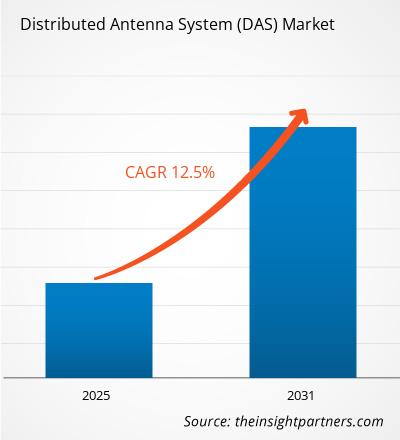
    Historical Data:The Distributed Antenna System (DAS) Market is expected to register a CAGR of 12.5% from 2025 to 2031, with a market size expanding from US$ XX million in 2024 to US$ XX Million by 2031.
    Key Factors Influencing Market Dynamics
    Spotting Emerging Trends:
    The DAS market is witnessing the emergence of new trends that are significantly impacting its growth trajectory. Identifying these trends is essential for businesses aiming to stay competitive.
    Technological Advancements:
    Rapid advancements in wireless technology, such as 5G deployment, are enhancing the effectiveness and efficiency of DAS solutions. These innovations are enabling better coverage and capacity in urban areas, driving demand for DAS installations.
    Changing Consumer Preferences:
    As consumers increasingly rely on mobile connectivity, there is a growing demand for robust and reliable network solutions. This shift is prompting businesses to invest in DAS to meet the connectivity needs of their customers.
    Regulatory Changes:
    The regulatory landscape surrounding telecommunications is evolving, impacting how DAS systems are deployed and operated. Compliance with new regulations is essential for service providers and infrastructure developers.


    Read More- https://www.theinsightpartners.com/reports/doppler-ultrasound-market


    Growth Opportunities

    The Distributed Antenna System (DAS) Market offers several growth opportunities for businesses willing to adapt and innovate. Key areas to consider include:

    Investment in Infrastructure: Companies should focus on upgrading their infrastructure to support advanced DAS technologies, ensuring they remain competitive in an evolving market.
    Strategic Partnerships: Collaborating with technology providers and telecommunications companies can enhance service offerings and expand market reach.
    Focus on Smart Cities: With the rise of smart city initiatives, there is an increasing demand for DAS solutions that support enhanced connectivity and communication across urban environments.


    Get The Infographics of Report: - https://diigo.com/0109zqm


    Conclusion

    The Distributed Antenna System (DAS) Market: Global Industry Trends, Share, Size, Growth, Opportunity, and Forecast 2025-2031 report provides much-needed insight for a company willing to set up its operations in the Distributed Antenna System (DAS) Market. Since an in-depth analysis of competitive dynamics, the environment, and probable growth path are given in the report, a stakeholder can move ahead with fact-based decision-making in favor of market achievements and enhancement of business opportunities.


    Frequently Asked Questions (FAQ): -

    What is driving growth in the Distributed Antenna System (DAS) market?
    Answer: - The DAS market is growing due to increasing mobile data traffic, rising demand for improved network coverage, and the rapid deployment of 5G infrastructure across urban and enterprise environments.

    What industries are adopting DAS solutions?
    Answer: - Key adopters include telecommunications, commercial real estate, transportation (airports, railways), healthcare, and public safety sectors seeking reliable indoor and outdoor connectivity.
    Enhancing Connectivity: Trends in the Distributed Antenna System (DAS) Market United States of America– [21-07-2025]- The Insight Partners is proud to announce its newest market report, "Enhancing Connectivity: Trends in the Distributed Antenna System (DAS) Market: An In-depth Analysis of the market ". The report provides a holistic view of the market and describes the current scenario as well as growth estimates of during the forecast period. Overview of the Distributed Antenna System (DAS) Market The Distributed Antenna System (DAS) Market is undergoing significant transformations, influenced by various factors including technological innovations, regulatory developments, and shifting consumer preferences. This report aims to provide a comprehensive analysis of the current market landscape and future growth projections. Market Segmentation: - By Offerings Component and Service By Coverages Indoor and Outdoor By Service Provider Carrier Ownership Neutral Host Enterprise Ownership By End-User Public Venue Transportation Industrial Healthcare Education Others Get the Sample of The Report: - https://www.theinsightpartners.com/sample/TIPEL00002685 Key Findings and Insights Market Size and Growth Historical Data:The Distributed Antenna System (DAS) Market is expected to register a CAGR of 12.5% from 2025 to 2031, with a market size expanding from US$ XX million in 2024 to US$ XX Million by 2031. Key Factors Influencing Market Dynamics Spotting Emerging Trends: The DAS market is witnessing the emergence of new trends that are significantly impacting its growth trajectory. Identifying these trends is essential for businesses aiming to stay competitive. Technological Advancements: Rapid advancements in wireless technology, such as 5G deployment, are enhancing the effectiveness and efficiency of DAS solutions. These innovations are enabling better coverage and capacity in urban areas, driving demand for DAS installations. Changing Consumer Preferences: As consumers increasingly rely on mobile connectivity, there is a growing demand for robust and reliable network solutions. This shift is prompting businesses to invest in DAS to meet the connectivity needs of their customers. Regulatory Changes: The regulatory landscape surrounding telecommunications is evolving, impacting how DAS systems are deployed and operated. Compliance with new regulations is essential for service providers and infrastructure developers. Read More- https://www.theinsightpartners.com/reports/doppler-ultrasound-market Growth Opportunities The Distributed Antenna System (DAS) Market offers several growth opportunities for businesses willing to adapt and innovate. Key areas to consider include: Investment in Infrastructure: Companies should focus on upgrading their infrastructure to support advanced DAS technologies, ensuring they remain competitive in an evolving market. Strategic Partnerships: Collaborating with technology providers and telecommunications companies can enhance service offerings and expand market reach. Focus on Smart Cities: With the rise of smart city initiatives, there is an increasing demand for DAS solutions that support enhanced connectivity and communication across urban environments. Get The Infographics of Report: - https://diigo.com/0109zqm Conclusion The Distributed Antenna System (DAS) Market: Global Industry Trends, Share, Size, Growth, Opportunity, and Forecast 2025-2031 report provides much-needed insight for a company willing to set up its operations in the Distributed Antenna System (DAS) Market. Since an in-depth analysis of competitive dynamics, the environment, and probable growth path are given in the report, a stakeholder can move ahead with fact-based decision-making in favor of market achievements and enhancement of business opportunities. Frequently Asked Questions (FAQ): - What is driving growth in the Distributed Antenna System (DAS) market? Answer: - The DAS market is growing due to increasing mobile data traffic, rising demand for improved network coverage, and the rapid deployment of 5G infrastructure across urban and enterprise environments. What industries are adopting DAS solutions? Answer: - Key adopters include telecommunications, commercial real estate, transportation (airports, railways), healthcare, and public safety sectors seeking reliable indoor and outdoor connectivity.
    Distributed Antenna System (DAS) Market Growth Report 2021-2031 : The Insight Partners
    Distributed Antenna System (DAS) Market is estimated to grow at a CAGR of 12.5% by 2031. Discover in-depth insights into the market's size, growth, trends.
    0 Comments 0 Shares 1K Views 0 Reviews
  • Growth Opportunities in the Doppler Ultrasound Market: A Comprehensive Analysis


    United States of America – [21-07-2025] – The Insight Partners is proud to announce its newest market report, "Growth Opportunities in the Doppler Ultrasound Market: A Comprehensive Analysis: An In-depth Analysis of the market." The report provides a holistic view of the market and outlines the current scenario along with growth projections for the forecast period.

    Overview of Doppler Ultrasound Market

    The Doppler Ultrasound Market is undergoing steady transformation due to rising healthcare demands, technological innovations, and evolving regulatory frameworks. Shifts in consumer preferences, growing awareness about non-invasive diagnostic tools, and the need for accurate vascular and cardiac assessments are shaping market dynamics. This report highlights the key factors influencing growth, including advancements in imaging technologies and the increased prevalence of cardiovascular disorders worldwide.


    Market Segmentation:

    By Portability

    Handled and Trolley Based
    By Application

    Obstetrics & Gynecology
    Radiology
    Cardiac
    Musculoskeletal and Others
    By End User

    Hospitals & Clinics
    Ambulatory Surgical Centers
    Diagnostic Centers
    Others


    Get the Sample of The Report: - https://www.theinsightpartners.com/sample/TIPHE100001418


    Key Findings and Insights

    Market Size and Growth

    Historical Data: The Doppler Ultrasound Market is expected to register a CAGR of 3.6% from 2025 to 2031, with a market size expanding from US$ XX million in 2024 to US$ XX Million by 2031.
    These estimates reflect increasing demand for precise, safe, and cost-effective diagnostic solutions.
    Key Factors and Emerging Trends:

    Technological Advancements
    Changing Consumer Preferences
    Regulatory Changes


    Read More: - https://www.theinsightpartners.com/reports/doppler-ultrasound-market


    Growth Opportunities

    The Doppler Ultrasound Market is positioned for significant expansion during the forecast period, supported by multiple growth avenues:

    Rising Cardiovascular and Vascular Disorders:
    The global increase in cardiovascular diseases and vascular conditions is driving the demand for Doppler ultrasound as a preferred, non-invasive diagnostic tool. Hospitals and diagnostic centers are investing in advanced equipment to meet this growing need.
    Technological Innovations in Imaging:
    Developments in 3D/4D imaging, portable ultrasound devices, and AI-powered diagnostic tools are enhancing the accuracy and usability of Doppler ultrasound, expanding its adoption across point-of-care and rural healthcare settings.
    Growing Geriatric Population:
    An aging population, prone to chronic conditions like arterial diseases and deep vein thrombosis, is fueling demand for reliable vascular assessments, boosting the use of Doppler ultrasound globally.
    Adoption in Emerging Economies:
    Healthcare infrastructure improvements and increasing awareness in regions such as Asia-Pacific, Latin America, and the Middle East are creating lucrative opportunities for market players to expand their reach.


    Get The Infographics of Report: - https://link.shutterfly.com/Mhs8Faw5aVb


    Conclusion

    The Doppler Ultrasound Market: Global Industry Trends, Share, Size, Growth, Opportunity, and Forecast 2025-2031 report provides much-needed insight for a company willing to set up its operations in the Doppler Ultrasound Market. Since an in-depth analysis of competitive dynamics, the environment, and probable growth path are given in the report, a stakeholder can move ahead with fact-based decision-making in favor of market achievements and enhancement of business opportunities.


    Frequently Asked Questions (FAQ): -

    What factors are driving Doppler Ultrasound market growth?
    Answer: - The market is driven by rising cases of cardiovascular and vascular diseases, advancements in imaging technology, and the growing demand for non-invasive diagnostic tools across healthcare systems.

    How are technological innovations impacting Doppler Ultrasound devices?
    Answer: - Innovations such as portable and handheld ultrasound systems, AI-powered diagnostic tools, and 3D/4D imaging are improving accuracy, accessibility, and patient outcomes, expanding their use globally.

    Which healthcare sectors are adopting Doppler Ultrasound most rapidly?
    Answer: - Hospitals, diagnostic centers, and point-of-care clinics are key adopters, driven by the need for reliable vascular and cardiac assessments.
    Growth Opportunities in the Doppler Ultrasound Market: A Comprehensive Analysis United States of America – [21-07-2025] – The Insight Partners is proud to announce its newest market report, "Growth Opportunities in the Doppler Ultrasound Market: A Comprehensive Analysis: An In-depth Analysis of the market." The report provides a holistic view of the market and outlines the current scenario along with growth projections for the forecast period. Overview of Doppler Ultrasound Market The Doppler Ultrasound Market is undergoing steady transformation due to rising healthcare demands, technological innovations, and evolving regulatory frameworks. Shifts in consumer preferences, growing awareness about non-invasive diagnostic tools, and the need for accurate vascular and cardiac assessments are shaping market dynamics. This report highlights the key factors influencing growth, including advancements in imaging technologies and the increased prevalence of cardiovascular disorders worldwide. Market Segmentation: By Portability Handled and Trolley Based By Application Obstetrics & Gynecology Radiology Cardiac Musculoskeletal and Others By End User Hospitals & Clinics Ambulatory Surgical Centers Diagnostic Centers Others Get the Sample of The Report: - https://www.theinsightpartners.com/sample/TIPHE100001418 Key Findings and Insights Market Size and Growth Historical Data: The Doppler Ultrasound Market is expected to register a CAGR of 3.6% from 2025 to 2031, with a market size expanding from US$ XX million in 2024 to US$ XX Million by 2031. These estimates reflect increasing demand for precise, safe, and cost-effective diagnostic solutions. Key Factors and Emerging Trends: Technological Advancements Changing Consumer Preferences Regulatory Changes Read More: - https://www.theinsightpartners.com/reports/doppler-ultrasound-market Growth Opportunities The Doppler Ultrasound Market is positioned for significant expansion during the forecast period, supported by multiple growth avenues: Rising Cardiovascular and Vascular Disorders: The global increase in cardiovascular diseases and vascular conditions is driving the demand for Doppler ultrasound as a preferred, non-invasive diagnostic tool. Hospitals and diagnostic centers are investing in advanced equipment to meet this growing need. Technological Innovations in Imaging: Developments in 3D/4D imaging, portable ultrasound devices, and AI-powered diagnostic tools are enhancing the accuracy and usability of Doppler ultrasound, expanding its adoption across point-of-care and rural healthcare settings. Growing Geriatric Population: An aging population, prone to chronic conditions like arterial diseases and deep vein thrombosis, is fueling demand for reliable vascular assessments, boosting the use of Doppler ultrasound globally. Adoption in Emerging Economies: Healthcare infrastructure improvements and increasing awareness in regions such as Asia-Pacific, Latin America, and the Middle East are creating lucrative opportunities for market players to expand their reach. Get The Infographics of Report: - https://link.shutterfly.com/Mhs8Faw5aVb Conclusion The Doppler Ultrasound Market: Global Industry Trends, Share, Size, Growth, Opportunity, and Forecast 2025-2031 report provides much-needed insight for a company willing to set up its operations in the Doppler Ultrasound Market. Since an in-depth analysis of competitive dynamics, the environment, and probable growth path are given in the report, a stakeholder can move ahead with fact-based decision-making in favor of market achievements and enhancement of business opportunities. Frequently Asked Questions (FAQ): - What factors are driving Doppler Ultrasound market growth? Answer: - The market is driven by rising cases of cardiovascular and vascular diseases, advancements in imaging technology, and the growing demand for non-invasive diagnostic tools across healthcare systems. How are technological innovations impacting Doppler Ultrasound devices? Answer: - Innovations such as portable and handheld ultrasound systems, AI-powered diagnostic tools, and 3D/4D imaging are improving accuracy, accessibility, and patient outcomes, expanding their use globally. Which healthcare sectors are adopting Doppler Ultrasound most rapidly? Answer: - Hospitals, diagnostic centers, and point-of-care clinics are key adopters, driven by the need for reliable vascular and cardiac assessments.
    Doppler Ultrasound Market Size (2021-2031) and Growth : The Insight Partners
    Doppler Ultrasound Market report provides a detailed study of the top drivers and the market is expected to register a 3.6% of CAGR by 2031.
    0 Comments 0 Shares 2K Views 0 Reviews
  • Exploring the Excitation Systems Market: Current Trends and Future Prospects


    United States of America – [21-07-2025] – The Insight Partners is proud to announce its newest market report, "Exploring the Excitation Systems Market: Current Trends and Future Prospects: An In-depth Analysis of the market." The report offers a comprehensive analysis of the market, highlighting the current scenario and projecting growth estimates during the forecast period.

    Overview of Excitation Systems Market

    The Excitation Systems Market is witnessing significant transformation, driven by modernization in power generation infrastructure, increasing adoption of renewable energy sources, and the need for reliable grid operations. Market dynamics have shifted due to technological advancements, regulatory reforms, and evolving end-user demand for efficient and stable power systems. This report examines the major factors influencing growth, including innovations in digital control systems, demand for grid stability, and upgrades in aging power plants worldwide.


    Market Segmentation:

    By Type

    Brushless Excitation Systems
    Static Excitation Systems
    By Controller Type

    Digital Control
    Analog Control
    By Application

    Synchronous Motors
    Synchronous Generators


    Get the Sample of The Report: - https://www.theinsightpartners.com/sample/TIPRE00008936


    Key Findings and Insights

    Market Size and Growth

    Historical Data: The Excitation Systems Market is expected to register a CAGR of 4.5% from 2025 to 2031, with a market size expanding from US$ XX million in 2024 to US$ XX Million by 2031.
    This growth underscores the rising demand for advanced excitation technologies across energy sectors.
    Key Factors and Emerging Trends:

    Technological Advancements
    Changing Consumer Preferences
    Regulatory Changes


    Read More: - https://www.theinsightpartners.com/reports/excitation-systems-market


    Growth Opportunities

    The Excitation Systems Market presents multiple opportunities for expansion during the forecast period, including:

    Integration of Digital and Automated Solutions:
    Advancements in digital excitation systems, automation, and monitoring technologies are improving grid stability and reducing operational costs. This is fueling adoption across new and retrofitted power generation facilities.

    Rising Investments in Renewable Energy:
    As renewable energy sources like wind and solar continue to grow, the demand for excitation systems that can manage fluctuating loads and maintain grid stability is increasing, creating strong market potential.

    Modernization of Aging Power Plants:
    Utilities are upgrading legacy systems with modern excitation technologies to enhance efficiency, reduce maintenance costs, and comply with regulatory requirements.

    Growing Demand in Emerging Markets:
    Rapid industrialization and urbanization in Asia-Pacific, Africa, and Latin America are driving the construction of new power plants, spurring demand for reliable excitation systems.


    Get The Infographics of Report: -

    https://www.flickr.com/photos/203116520@N04/54668564201/in/dateposted-public/


    Conclusion

    The Excitation Systems Market: Global Industry Trends, Share, Size, Growth, Opportunity, and Forecast 2025-2031 report provides much-needed insight for a company willing to set up its operations in the Excitation Systems Market. Since an in-depth analysis of competitive dynamics, the environment, and probable growth path are given in the report, a stakeholder can move ahead with fact-based decision-making in favor of market achievements and enhancement of business opportunities.


    Frequently Asked Questions (FAQ): -

    What is driving the growth of the Excitation Systems Market?
    Answer: - The market is driven by the modernization of power plants, rising demand for grid stability, increasing renewable energy integration, and advancements in digital and automated excitation technologies.

    How are technological innovations impacting excitation systems?
    Answer: - Digital control systems, real-time monitoring, and automation are improving the efficiency, reliability, and flexibility of excitation systems, making them essential for modern power generation and grid operations.

    Which industries or sectors use excitation systems most?
    Answer: - Excitation systems are widely used in power generation plants (thermal, hydro, and renewable), industrial manufacturing, and smart grid infrastructure for maintaining system stability and performance.
    Exploring the Excitation Systems Market: Current Trends and Future Prospects United States of America – [21-07-2025] – The Insight Partners is proud to announce its newest market report, "Exploring the Excitation Systems Market: Current Trends and Future Prospects: An In-depth Analysis of the market." The report offers a comprehensive analysis of the market, highlighting the current scenario and projecting growth estimates during the forecast period. Overview of Excitation Systems Market The Excitation Systems Market is witnessing significant transformation, driven by modernization in power generation infrastructure, increasing adoption of renewable energy sources, and the need for reliable grid operations. Market dynamics have shifted due to technological advancements, regulatory reforms, and evolving end-user demand for efficient and stable power systems. This report examines the major factors influencing growth, including innovations in digital control systems, demand for grid stability, and upgrades in aging power plants worldwide. Market Segmentation: By Type Brushless Excitation Systems Static Excitation Systems By Controller Type Digital Control Analog Control By Application Synchronous Motors Synchronous Generators Get the Sample of The Report: - https://www.theinsightpartners.com/sample/TIPRE00008936 Key Findings and Insights Market Size and Growth Historical Data: The Excitation Systems Market is expected to register a CAGR of 4.5% from 2025 to 2031, with a market size expanding from US$ XX million in 2024 to US$ XX Million by 2031. This growth underscores the rising demand for advanced excitation technologies across energy sectors. Key Factors and Emerging Trends: Technological Advancements Changing Consumer Preferences Regulatory Changes Read More: - https://www.theinsightpartners.com/reports/excitation-systems-market Growth Opportunities The Excitation Systems Market presents multiple opportunities for expansion during the forecast period, including: Integration of Digital and Automated Solutions: Advancements in digital excitation systems, automation, and monitoring technologies are improving grid stability and reducing operational costs. This is fueling adoption across new and retrofitted power generation facilities. Rising Investments in Renewable Energy: As renewable energy sources like wind and solar continue to grow, the demand for excitation systems that can manage fluctuating loads and maintain grid stability is increasing, creating strong market potential. Modernization of Aging Power Plants: Utilities are upgrading legacy systems with modern excitation technologies to enhance efficiency, reduce maintenance costs, and comply with regulatory requirements. Growing Demand in Emerging Markets: Rapid industrialization and urbanization in Asia-Pacific, Africa, and Latin America are driving the construction of new power plants, spurring demand for reliable excitation systems. Get The Infographics of Report: - https://www.flickr.com/photos/203116520@N04/54668564201/in/dateposted-public/ Conclusion The Excitation Systems Market: Global Industry Trends, Share, Size, Growth, Opportunity, and Forecast 2025-2031 report provides much-needed insight for a company willing to set up its operations in the Excitation Systems Market. Since an in-depth analysis of competitive dynamics, the environment, and probable growth path are given in the report, a stakeholder can move ahead with fact-based decision-making in favor of market achievements and enhancement of business opportunities. Frequently Asked Questions (FAQ): - What is driving the growth of the Excitation Systems Market? Answer: - The market is driven by the modernization of power plants, rising demand for grid stability, increasing renewable energy integration, and advancements in digital and automated excitation technologies. How are technological innovations impacting excitation systems? Answer: - Digital control systems, real-time monitoring, and automation are improving the efficiency, reliability, and flexibility of excitation systems, making them essential for modern power generation and grid operations. Which industries or sectors use excitation systems most? Answer: - Excitation systems are widely used in power generation plants (thermal, hydro, and renewable), industrial manufacturing, and smart grid infrastructure for maintaining system stability and performance.
    Excitation Systems Market Share and Growth (2021-2031) : The Insight Partners
    Excitation Systems Market is projected to have a CAGR of 4.5% by 2031. Unveiling market opportunities and key drivers.
    0 Comments 0 Shares 1K Views 0 Reviews
  • Bangalore's Event Experts
    Planning an event in a bustling city like Bangalore can often feel like juggling a dozen moving parts — all while trying to enjoy the experience. That’s why turning to a professional planner can make all the difference. Among the many bangalore event management companies, Ananta Group stands out with nearly two decades of expertise and a passion for curating seamless, memorable...
    0 Comments 0 Shares 1K Views 0 Reviews