



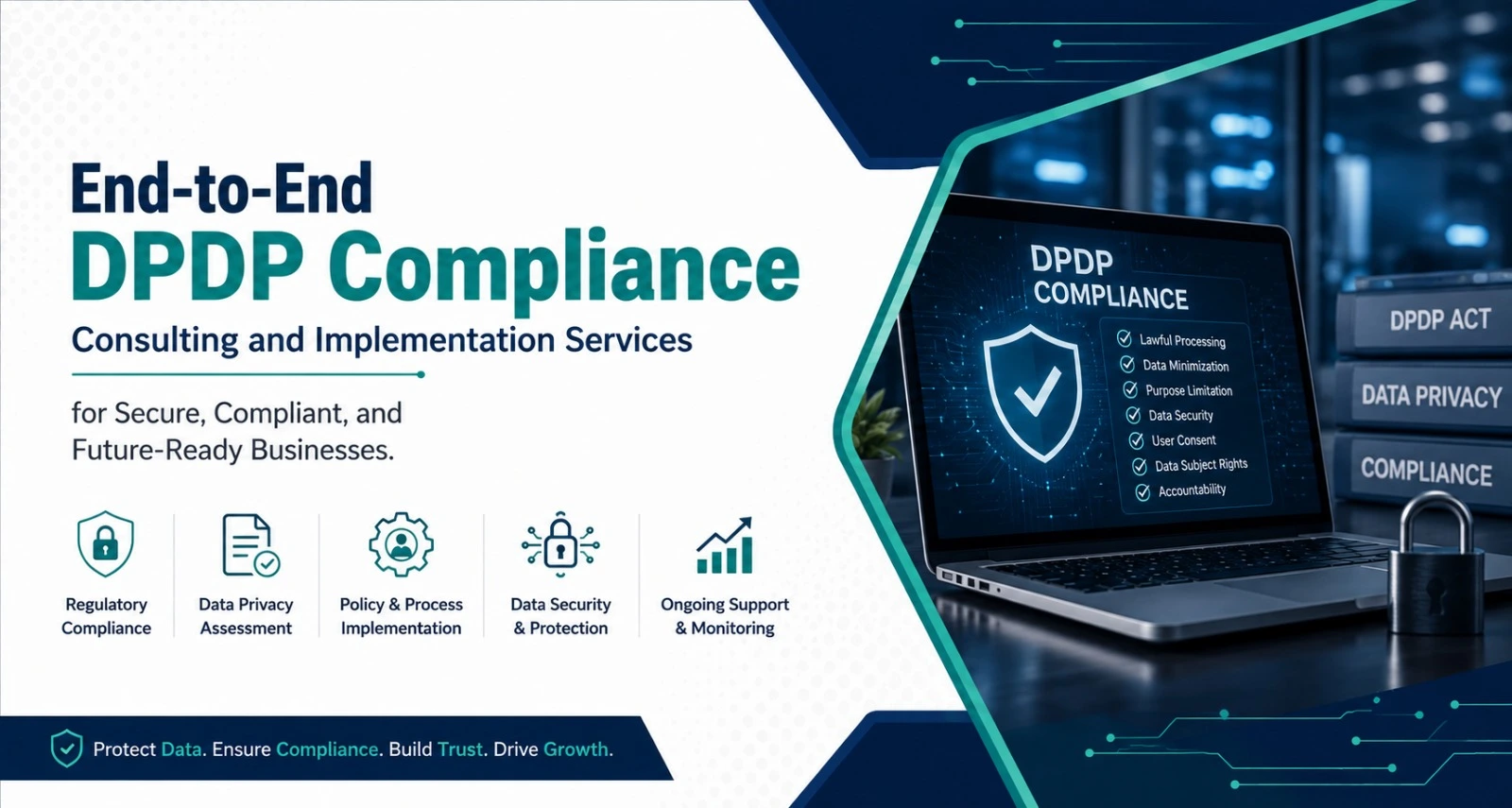
E-commerce businesses collect and process personal data through online accounts, shopping carts, order management systems, delivery platforms, payment integrations, marketing tools, and customer support channels. Radiant Info Solutions provides DPDP compliance consulting for e-commerce companies to help assess these data flows and identify areas where privacy practices may need improvement. The assessment can cover privacy notices, consent mechanisms where applicable, customer data access, third-party integrations, retention schedules, marketing data practices, and incident response procedures. Businesses can also review how customer information moves between their websites, mobile applications, logistics providers, service partners, and internal teams. A structured data inventory and gap analysis can help establish clearer oversight of these processes. Similar considerations apply to retail, logistics, and digital service businesses that rely on interconnected platforms. Radiant helps organizations prioritize improvements and develop practical compliance roadmaps tailored to their operational needs. Effective implementation may involve updating policies, improving internal procedures, reviewing vendor arrangements, and training employees who handle personal information. By approaching DPDP compliance as part of everyday business operations, e-commerce organizations can strengthen accountability, improve data handling practices, and build a more consistent privacy framework across the customer journey.
Read More: https://radiant.in/industry-specific-dpdp-compliance-consulting-services-healthcare-bfsi-it-saas-ecommerce-india/
Read More: https://radiant.in/industry-specific-dpdp-compliance-consulting-services-healthcare-bfsi-it-saas-ecommerce-india/
E-commerce businesses collect and process personal data through online accounts, shopping carts, order management systems, delivery platforms, payment integrations, marketing tools, and customer support channels. Radiant Info Solutions provides DPDP compliance consulting for e-commerce companies to help assess these data flows and identify areas where privacy practices may need improvement. The assessment can cover privacy notices, consent mechanisms where applicable, customer data access, third-party integrations, retention schedules, marketing data practices, and incident response procedures. Businesses can also review how customer information moves between their websites, mobile applications, logistics providers, service partners, and internal teams. A structured data inventory and gap analysis can help establish clearer oversight of these processes. Similar considerations apply to retail, logistics, and digital service businesses that rely on interconnected platforms. Radiant helps organizations prioritize improvements and develop practical compliance roadmaps tailored to their operational needs. Effective implementation may involve updating policies, improving internal procedures, reviewing vendor arrangements, and training employees who handle personal information. By approaching DPDP compliance as part of everyday business operations, e-commerce organizations can strengthen accountability, improve data handling practices, and build a more consistent privacy framework across the customer journey.
Read More: https://radiant.in/industry-specific-dpdp-compliance-consulting-services-healthcare-bfsi-it-saas-ecommerce-india/
0 Commenti
0 condivisioni
164 Views
0 Anteprima


 English
 Arabic
 French
 Spanish
 Portuguese
 Deutsch
 Turkish
 Dutch
 Russian
 Romaian
 Portuguese (Brazil)
 Greek